

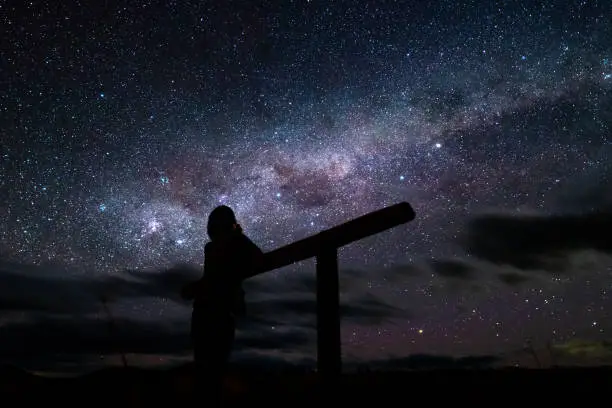
WHERE THE STARS MEET THE SEA
In Kaikōura, there exists a profound and ancient connection that few places on Earth can claim—a convergence of celestial and marine migrations that has shaped the spiritual landscape of this remarkable region for centuries. As Matariki rises in the winter sky, signaling the Māori New Year, the waters off Kaikōura’s coast teem with life, creating a unique intersection of sky and sea that deepens the meaning of this sacred time.
The Whales of Winter
Kaikōura is world-renowned as one of the premier whale watching destinations on the planet, and for good reason. The deep Kaikōura Canyon lies remarkably close to shore, creating nutrient-rich upwellings that attract an extraordinary diversity of marine life. During the Matariki season, which falls in the heart of New Zealand’s winter months, these waters become a crucial feeding ground and migration corridor for numerous whale species.
Sperm whales, the region’s most famous residents, can be observed year-round in these waters, their massive forms breaching and diving in patterns that have remained unchanged for millennia. But the Matariki season brings additional visitors: migrating humpback whales making their journey between Antarctic feeding grounds and tropical breeding waters, pilot whales moving through in their tight-knit family pods, and occasionally, the magnificent blue whales—the largest animals ever to exist on Earth.
Ancient Guardians, Ancient Stars
The connection between Matariki and whales runs deeper than mere coincidence of timing. In Māori tradition, whales—or tohorā—hold immense spiritual significance. They are considered kaitiaki, or guardians, of the ocean realm. When a whale beaches itself, it’s seen as a profound event, often interpreted as a message from the spiritual world or a sacrifice to nourish the people during difficult times.
The star cluster Matariki itself is intrinsically linked to the ocean. Two of its seven stars, Waitī and Waitā, are specifically associated with food sources from fresh and salt water. Their appearance in the sky was traditionally used to predict the abundance of seafood and the health of marine ecosystems for the coming year. If these stars shone brightly and clearly, it promised a bountiful season; if they appeared dim or obscured, communities would prepare for leaner times.
In Kaikōura, where the relationship between land and sea is so intimate, this connection takes on particular resonance. The same dark, unpolluted skies that allow Matariki to shine with such clarity also mirror the deep, clean waters that sustain the whale populations. Both the stars and the whales have navigated by ancient patterns, following paths established long before human civilization emerged.
Navigators of Different Realms
Consider the remarkable parallel between celestial and marine navigation. For centuries, Māori voyagers used the stars—including Matariki—to navigate across vast stretches of the Pacific Ocean, finding tiny islands in an endless expanse of water through careful observation of the heavens. They arrived in Aotearoa by reading the sky, understanding the seasonal movements of stars, and interpreting the messages written in the cosmos.
Whales, too, are master navigators, traveling thousands of kilometers with astonishing precision. Research has revealed that whales likely navigate using the Earth’s magnetic field, the position of the sun, and possibly even the stars themselves. Some scientists theorize that whales may use celestial navigation during their long migrations, looking upward through the water’s surface to orient themselves by the same stars that guided Māori navigators.
During Matariki in Kaikōura, you can witness both forms of navigation simultaneously. As the Matariki cluster rises in the pre-dawn sky, whales move through the dark waters below, each following ancient pathways written into their very beings. The stars above and the whales below become mirrors of each other—both following timeless patterns, both essential to the stories and survival of this place.
A Time of Dual Observation
The Matariki season in Kaikōura offers a unique opportunity for dual observation that exists nowhere else quite like this. While many locations in New Zealand can offer excellent Matariki star gazing, and other places provide remarkable whale watching, Kaikōura brings both experiences together in a way that honors the deep connections between them.
Imagine spending your days on the water, watching sperm whales dive into the depths of the Kaikōura Canyon, their massive flukes rising against the backdrop of snow-capped mountains before they disappear beneath the surface. These whales dive deeper than any other mammal—sometimes reaching depths of over 2,000 meters—staying submerged for up to ninety minutes as they hunt for giant squid in the lightless depths.
Then, as evening falls, you turn your gaze upward to those same mountains, now silhouetted against a sky beginning to fill with stars. As darkness deepens, Matariki emerges—that tight cluster of stars rising in the northeast, each one carrying its own meaning and message. The same sense of awe that filled you watching the whales returns, but now it’s directed skyward, toward lights that have traveled for hundreds of years to reach your eyes at this exact moment.
Reflection and Renewal
The parallel themes of Matariki—reflection, gratitude, and new beginnings—find perfect expression in the whale watching experience. Observing these magnificent creatures, so enormous yet so graceful, naturally invites contemplation. There’s something humbling about witnessing a being so much larger than yourself, so ancient in its lineage, so utterly at home in an environment that would be hostile to human life.
Whales remind us that we share this planet with other conscious, intelligent beings who have their own cultures, their own methods of communication, their own ways of passing knowledge from one generation to the next. Watching a mother whale teach her calf, or witnessing the complex social interactions of a whale pod, echoes the very essence of Matariki—the passing down of wisdom, the strengthening of family bonds, and the continuation of traditions that connect past, present, and future.
The Promise of Protection
Both Matariki observations and whale populations in Kaikōura represent something else important: the power of protection and restoration. Kaikōura’s designation as an International Dark Sky Sanctuary required commitment from the community to preserve the darkness, to resist light pollution, and to maintain this precious resource for future generations. Similarly, whale populations—once hunted nearly to extinction—have been recovering thanks to international protection efforts and the dedication of communities like Kaikōura to conservation.
During the Matariki season, this dual commitment to preservation takes on special significance. It’s a time to reflect on our role as kaitiaki, as guardians, of both the night sky and the ocean realm. It’s an opportunity to express gratitude for the recovery of whale populations and the protection of dark skies, while also renewing our commitment to ensuring these wonders remain for our children and their children to experience.
An Invitation to Wonder
Experiencing Matariki in Kaikōura, with its unique connection to the whale populations that grace these waters, offers something beyond ordinary star gazing or wildlife watching. It provides a holistic understanding of how traditional Māori knowledge recognized the interconnectedness of all things—sky and sea, stars and whales, past and future.
As you stand on Kaikōura’s shores during the Matariki season, you exist at a crossroads of migrations: whales moving through the waters, stars moving across the sky, and your own journey that has brought you to this remarkable place. In this moment, the boundaries between earth, ocean, and cosmos seem to dissolve, revealing the fundamental truth that Matariki teaches—we are all part of one vast, interconnected system, and our wellbeing depends on honoring and protecting these connections.
This is the gift of Matariki in Kaikōura: not just the opportunity to see stars or whales, but to understand, in a visceral and unforgettable way, the relationships that bind them together and bind us to them both.
