
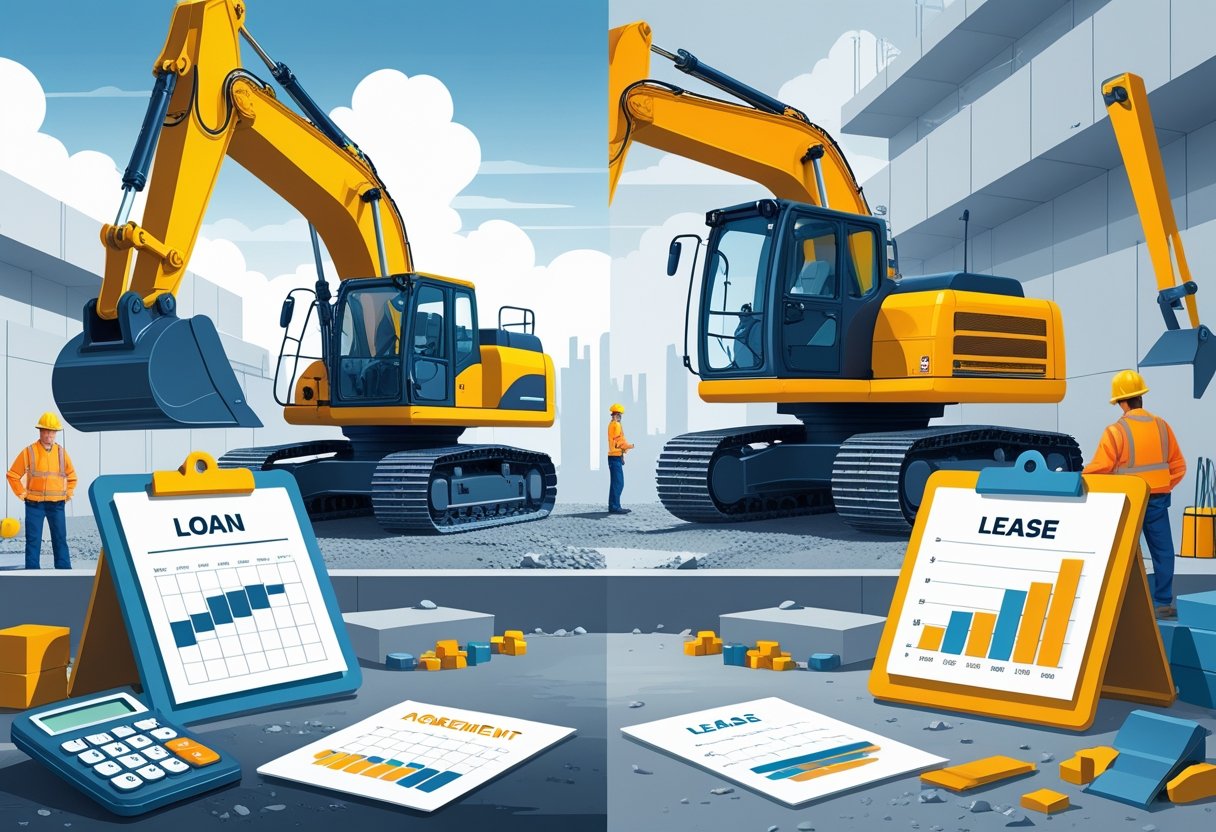
Deciding between an excavator loan and a lease can shape your business’s finances in ways you might not expect. Both options help construction companies get the equipment they need without shelling out the full price right away, but the impact on cash flow, taxes, and long-term costs can look pretty different.
If you’re working on long-term projects or always need your excavator, buying with a loan usually saves more over time. Leasing tends to fit better for short-term gigs or when you want to keep your options open. It really comes down to how much you’ll use the equipment, what your cash flow looks like, and if you want to own the machine or just use it and move on.
There’s more to the cost than just the monthly payment. You’ve got to think about depreciation, taxes, maintenance, and what you’ll get back if you sell. Used equipment can be a solid way to save, too, if you’re open to it.
Comparing Excavator Loans vs. Leasing

Loans and leases both get you an excavator, but the path is pretty different. Loans build up your equity, while leasing gives you more flexibility and keeps upfront costs low.
How Excavator Loans Work
With equipment loans, you borrow money to buy the excavator, and the machine itself backs the loan.
Most lenders want 10-20% down. Interest rates bounce between 5-15%, depending on your credit and business background.
Typical loan terms:
- 3-7 year repayment periods
- Fixed or variable interest rates
- Monthly payments with principal and interest
- Full ownership at the end
You get to call the excavator yours right away. You can tweak it, rack up the hours, and claim depreciation on your taxes.
Banks, credit unions, and equipment finance companies all offer these loans. They’ll ask for your financials, tax returns, and proof that your business is legit.
Check out excavatorfinanceoz.com.au for more information on some great financing options.
Understanding Equipment Leasing
Leasing lets you use an excavator without buying it outright. The leasing company owns the machine; you just pay for the right to use it.
Two main types:
- Operating leases – Short-term, lower payments
- Capital leases – Longer-term, more like a loan, sometimes with an option to buy
Operating leases usually last 2-4 years and cost less per month than loans. At the end, you either return the machine or maybe buy it (if that’s in the contract).
Capital leases feel a lot like loans. You treat the excavator as an asset on your books and often have a buyout at the end.
Lease payments stay lower than loan payments because you’re just covering depreciation, not the whole sticker price.
Financial Impact on Business Cash Flow
Loans mean you pay more upfront but start building equity right away. Down payments and monthly payments both run higher than what you’d see with a lease.
As you pay down the loan, your ownership stake grows.
Leasing keeps more cash in your pocket since you usually don’t need a down payment. Lease payments often run 20-30% less per month than loan payments.
Cash flow at a glance:
- Loans tie up more cash at first but build an asset
- Leasing keeps your working capital free
- Lease payments stay steady
If cash is tight, leasing feels safer. If you’ve got reserves, buying through a loan might pay off more in the long run.
Ownership vs. Flexibility
Loans give you full ownership once paid off. You can modify, use, or sell the excavator whenever you want.
That equity shows up on your balance sheet and can help you get more financing down the road.
Leasing gives you room to adapt if your needs change. Upgrade to a new model at the end—no hassle selling the old one.
Owning perks:
- No limits on use or customization
- You keep any resale value
Leasing perks:
- Access to the latest tech
- Easy to swap out equipment
- No worries about resale or old machines losing value
If your projects change a lot, leasing makes sense. If you’re in it for the long haul, owning usually wins out.
Key Cost Considerations Over Time

You really see the cost difference over time when you look at upfront spending, ongoing bills, and what the machine’s worth down the road. Taxes and depreciation can make a big difference, too.
Upfront and Ongoing Expenses
Buying means you’ll put down 10-20% of the purchase price. Monthly payments on a loan will be higher than a lease for the same machine.
But, those payments build equity. Once the loan’s paid off, you own it outright—no more payments.
Leasing usually skips the down payment, and the monthly bill is easier to handle (at least at first).
But if you lease for years on end, you might end up paying more than if you’d just bought it.
Maintenance can be a toss-up. Some leases include it; if you own, you’ll have to set aside cash for repairs.
Depreciation and Equipment Value
Excavators drop in value over time, but if you own one, you can write off that depreciation on your taxes and pocket any resale money.
Paying down a loan means you build equity, and you can use that as collateral or sell the machine if you need cash.
Leasing shifts depreciation risk to the lessor. You don’t have to worry about losing value, but you also don’t get any back at the end.
A well-kept excavator can hold onto 40-60% of its value after five years. Owners get that back if they sell; lessees just give the machine back.
Tech upgrades can change how fast a machine loses value. Newer models might not drop as fast.
Tax Implications and Benefits
Loans let you deduct depreciation and interest. That can lower your taxable income over several years.
Lease payments are usually fully deductible as operating expenses the year you pay them, which gives you a quicker tax break.
Section 179 can let you write off the whole purchase price in the first year (up to a cap), which is huge for some businesses.
Tax rules get tricky depending on your business setup. If you’re not sure, talk to a pro.
Timing matters. Buy late in the year, and you might still get the full-year depreciation. Lease deductions hit when you make payments.
Evaluating Used Excavators: Loans and Leasing Options
Used excavators cost less upfront and don’t lose value as quickly as new ones. You can finance or lease pre-owned machines, and each route has its own upsides.
Financing Used Equipment Purchases
Most banks and lenders will finance used excavators if they’re less than 10 years old. Loan terms usually run 24 to 60 months for used; new machines might get up to 72 months.
Used equipment loan rates:
- 6% to 12% APR, depending on age
- Rates are higher than for new machines
- Newer used models (2-5 years old) get better rates
You’ll probably need to put down 15-25% for used gear, compared to 10-15% for something brand new.
Once you buy, the machine’s yours. Modify it, sell it, whatever you need. You’re not locked in.
Used equipment loans work best if you plan to keep the machine for a while. After three or four years, you’ll usually pay less than if you’d leased.
Leasing Advantages for Pre-Owned Machines
Some leasing companies have programs for late-model used excavators (usually under five years old). Monthly payments run 20-30% lower than financing the same gear.
Leasing used excavators gives you:
- Lower monthly payments
- Maintenance often included
- Easy upgrades at lease end
- Sometimes no down payment
Leases for used machines are shorter—12 to 36 months—so you’re not stuck with an old machine for too long.
The lessor usually covers big repairs. That’s a relief, since used gear can be unpredictable. Some even swap in a replacement if yours breaks down.
You can write off lease payments on your taxes right away, instead of spreading depreciation over years.
Leasing used is smart if your workload changes a lot, or if you want to try out a few models before buying.
Making the Right Decision for Your Business
So, should you lease or finance? It really boils down to how long you’ll need the excavator, how your finances look, and how fast new tech matters in your work.
Assessing Project Duration and Equipment Needs
If your project’s under two years, leasing is probably the way to go. You skip the big upfront spend and just hand the machine back when you’re done.
For longer projects—three years or more—financing usually works out cheaper. Your payments turn into ownership, not just rent.
Think about:
- How long your projects last
- How many excavators you need
- If you need a specific model
- How often you’ll use the machine
If your calendar’s packed and you’ll use the excavator more than half the year, buying tends to save money.
If your needs change a lot, leasing makes it easy to swap models between jobs.
Evaluating Financial Health
Your cash flow will steer this decision. If you’ve got solid reserves, financing is manageable.
Check:
- How steady your cash flow is
- What credit you can access
- Your tax situation
- How much you want to invest
If money’s tight, leasing keeps your cash free for other stuff.
If your credit is good and your income steady, loans usually cost less over time than endless leasing.
Watch your debt-to-income ratio, though—too much equipment debt can make it tough to get other loans.
Technology Upgrades and Equipment Lifecycles
Tech upgrades hit excavators a bit differently than other gear. Most models feel up-to-date for about 5-7 years before big changes roll in.
Leasing’s a solid choice if you like having the latest machines. When your lease wraps up, just swap in a newer model.
Technology considerations:
- Fuel efficiency tweaks
- Safety feature upgrades
- Emission standard shifts
- Digital control systems
If tech moves slowly in your area, financing usually makes more sense. With good maintenance, basic excavators can pull their weight for 10-15 years.
Some companies—especially those tackling specialized jobs—really need custom features. Financing lets you tweak your equipment and hang onto those upgrades for the long haul.
Think about what your competitors are doing and what clients expect. Certain projects just demand newer machines with better fuel economy or cleaner emissions.
