

Today, teenagers face a lot of challenges because they are growing up in a fast-paced technological world. These challenges include increased academic stress, parental expectations, and social media pressure. Well, it’s normal for teens to get stressed occasionally. However, persistent anxiety and negative thoughts can hurt their emotional health, relationships, and school grades. Luckily, CBT for teens is a proven and expert-recommended behavioral therapy to address such mental health issues.
Therefore, this guide will explain how CBT can aid in managing negative thoughts, stress, and anxiety in teens.
What is CBT?
Well, CBT, or Cognitive Behavioral Therapy, is a proven treatment approach to figure out distorted thoughts and then change the way of thinking. CBT is straightforward and goal-oriented.
Many teenagers have thoughts that just pop into their heads, and they do not even realize these thoughts are affecting how they feel and behave. Cognitive Behavioral Therapy helps teenagers see these thought patterns, question thoughts that are not true, and replace them with more reasonable thoughts.
Moreover, CBT is designed differently, as in this therapy teens do not just talk about their problems. They learn ways to deal with them and make their lives better.
Understanding The Connection Between Thoughts, Feelings and Actions
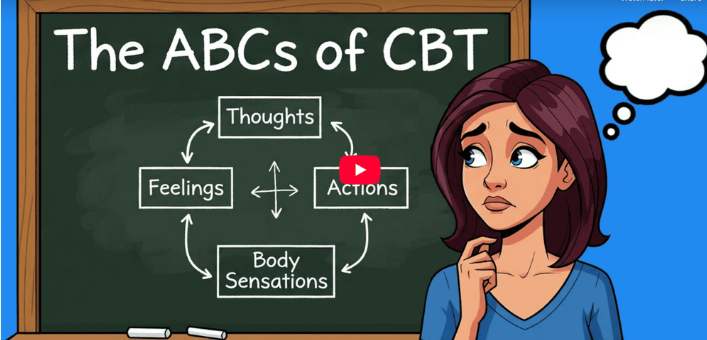
Well, CBT is based on the idea that our thoughts influence our feelings and our feelings influence our actions.
For example, when a teenager scores badly on one test, he might think:
“I am just not smart.”
“I will never do well.”
“Everyone thinks I am dumb.”
As a result, these thoughts make him feel really nervous or really sad. He might just feel like giving up. This can make him stay away from his schoolwork or not be actively present in class.
But the good news is that CBT helps teenagers stop this from happening by changing their thoughts into more positive and helpful ones. CBT teaches teenagers how to think about things positively so they can feel better and do better.
How Does CBT Help Teens Manage Anxiety?
Anxiety can be really tough on teenagers. Every second, it makes them think that something bad is going to happen. Consequently, they start to avoid things, people, and places that make them nervous or worried beyond control.
CBT helps teens to overcome anxiety effectively.
It teaches them how to do things like:
- Recognize when they have negative thoughts
- Figure out what they are really afraid of and if it is realistic
- Learn ways to calm down when they are feeling anxious
- Slowly face the things that scare them
- Feel good about themselves when they accomplish things
Every teen mustn’t let chronic anxiety run throughout their life. So, teens can use CBT to take control of their anxiety and feel more in charge of their life.
Breaking the Cycle of Negative Thinking:
Well, challenging thoughts are common in teenagers, especially when they are depressed or anxious about something.
Some common negative thought points in teens are:
“Nothing ever goes right for me.”
“I do not think I am good enough.’
“Nobody likes me.”
“I always mess things up.”
So, the idea behind Cognitive Behavioral Therapy or CBT is that teenagers should think about these negative thoughts and challenge them if they are really true and acceptable.
In the end, when teenagers look for evidence behind negative thoughts and think about appropriate ways to look at things, and when they try to think in a more balanced way, they often start to feel better and more confident. In this way, CBT can help teenagers break the cycle of negative thinking.
Practical Skills That Teens Learn Through CBT:
One of the reasons why Cognitive Behavioral Therapy’s so helpful is that it teaches teens skills that they can use outside of their therapy sessions.
Teens learn the following skills in CBT:
- How to deal with emotions that feel too much to handle
- How to talk to people in an appropriate way that really works
- How to figure out problems without feeling scared or unsure
- How to make healthy habits a part of daily life
- How to be strong when things get tough emotionally
- How to understand themselves better
To conclude, these skills are really important for taking care of mental health, and they keep helping teens even after they finish therapy.
Conditions CBT Can Help Treat:
Conditions cognitive behavioral therapy can help with are:
- Generalized anxiety
- Anxiety
- Depression
- Panic attacks
- Stress from traumatic experiences
- Obsessive Compulsive Disorder or OCD
- Stress related to school
- Low self-esteem
In the end, a mental health professional will figure out if CBT is the best treatment for a teenager based on their specific needs and situation.
The Role of Parents in CBT Success:
Parents and caregivers are really important during treatment.
The most important thing is that you do not need to have all the answers to support a teen. It is about making them feel like you are listening. That you think they are doing a great job.
Here are some helpful things parents can do to help with CBT:
- Encourage them to go to therapy
- Listen to them without being critical
- Practice dealing with problems together
- Praise them when they achieve small targets in therapy
- Celebrate how far they have come, not how perfect they are
However, when therapy and family support work together, teens often feel more confident using new skills in their daily life.
Conclusion:
Wrapping up, Cognitive Behavioral Therapy, or CBT, for teenagers gives teenagers the things they need to deal with anxiety, make stress smaller, and get rid of thoughts. It does not just help with the problems teenagers are having; it helps teenagers become stronger, get better at dealing with their emotions, and find better ways to handle the hard things that happen in life.
