

If you’ve ever driven across a stretch of highway somewhere between Brisbane and Cairns, you’ve probably noticed how the road just seems to melt into the horizon. Long. Black. Shimmering under the sun. That’s road bitumen at work. Holding everything together, kilometre after kilometre.
But here’s the thing. Road bitumen isn’t just a layer of sticky black stuff poured on gravel. It’s the backbone of Australian transport. The reason trucks don’t rattle apart halfway through the Nullarbor. The reason a weekend drive doesn’t feel like a rollercoaster is that.
And yet, most of us barely give it a thought.
The Quiet Hero of Australian Roads
Ask any road crew worker and they’ll tell you: road bitumen is the unsung hero of our infrastructure. It binds, seals, flexes, and stretches — all while facing some of the most brutal conditions anywhere in the world.
Think about it. You’ve got the baking heat in the north, frost down south, and relentless UV in between. And somehow, road bitumen keeps everything glued together. It’s kind of wild when you really think about it.
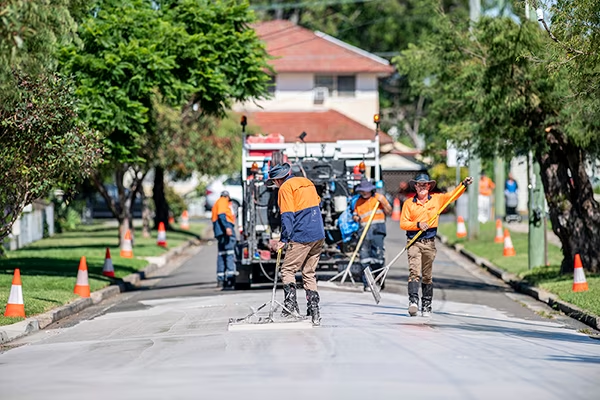
Every strip of bitumen you drive on has been mixed, heated, and laid with precision. Too hot and it cracks early. Too cold and it won’t bond. There’s an art to it — a science too — but mostly, it’s the quiet skill of people who’ve done it for decades. People who know the smell of fresh road bitumen, like others, see the scent of rain.
A Little More Than Just Asphalt
Here’s a fun fact. People often say “asphalt road” when what they’re really talking about is road bitumen. The two aren’t the same. Bitumen is the binding agent — the black, tar-like glue that holds aggregates together. Asphalt is the final mix of bitumen plus crushed rock.
Without road bitumen, the whole thing falls apart. Literally.
The reason bitumen works so well in Australia is its flexibility. It expands and contracts. It deals with the kind of temperature swings that would make concrete split like old paint. That’s why you’ll find bitumen roads running across everything from inner-city streets to outback truck routes. It’s strong. Affordable. Repairable. And honestly, kind of perfect for this country’s extremes.
Road Bitumen and the Climate Challenge
Now, not to get too technical, but road bitumen has been evolving. For decades, it was just the byproduct of oil refining. Simple. Effective. But today, climate conditions are testing it harder than ever. Extreme heat, floods, and unpredictable rainfall are making traditional bitumen mixes less reliable in some regions.
So researchers and contractors are tweaking it — adding polymers, rejuvenators, even recycled rubber. Some mixes can handle scorching 50-degree heat without softening. Others are designed to drain water better during Queensland’s wet season.
It’s a mix of science and experience. A bit like cooking — but instead of a kitchen, it’s a roaring hot paver machine and a crew in hi-vis gear watching the surface temperature like hawks.
This constant innovation is what keeps road bitumen relevant. And durable. And it’s why you’ll probably be driving on the same sealed road years from now — still smooth, still solid.
Connecting Communities, Not Just Cities
There’s something poetic about how road bitumen ties this country together. A black ribbon running through deserts, forests, and towns. It connects families. It gets supplies to supermarkets. It keeps regional Australia alive.
In remote areas, road bitumen is more than convenient. It’s survival. A sealed road can mean quicker access to hospitals, education, and trade. When the bitumen arrives, opportunity follows.
You’ll often hear small-town locals talk about the day “the bitumen came through.” Because it changes everything, dusty tracks turn into proper roads. Tourists start coming. Businesses pop up. That’s what a simple layer of road bitumen can do. It opens up possibilities.
The Art of Maintenance
Of course, even the toughest road bitumen needs care. Cracks form. Heat and water sneak in. And before you know it, you’ve got potholes.
That’s where resealing comes in. A thin layer of bitumen is sprayed over the surface, maybe with some fresh aggregate. Quick. Efficient. Gives the road another decade of life.
Then there’s patching, resurfacing, and full-depth reconstruction — each depending on how far the damage has gone. It’s a whole ecosystem of maintenance. Roads aren’t just built once; they’re tended to, like gardens.
Looking Ahead
The future of road bitumen in Australia is… interesting. We’re talking smart roads, temperature-sensitive materials, even self-healing surfaces that use heat to repair micro-cracks. It sounds futuristic — and yet, it’s already being tested.
Because while the materials might get smarter, the heart of road construction will always be human. People are making sure that the stretch of bitumen you drive on every morning stays safe and smooth.
Final Thought
So, next time you’re cruising down a highway, maybe notice the road under your tyres. That steady hum? That’s road bitumen — doing its quiet, essential job.
It’s easy to take for granted. But without it, Australia wouldn’t move. Literally.Every kilometre sealed, every crack repaired, every dusty road transformed into something driveable — that’s road bitumen from Roadseal Civil in action. And in a country this big, this tough, and this unpredictable, that little black layer makes all the difference.
