

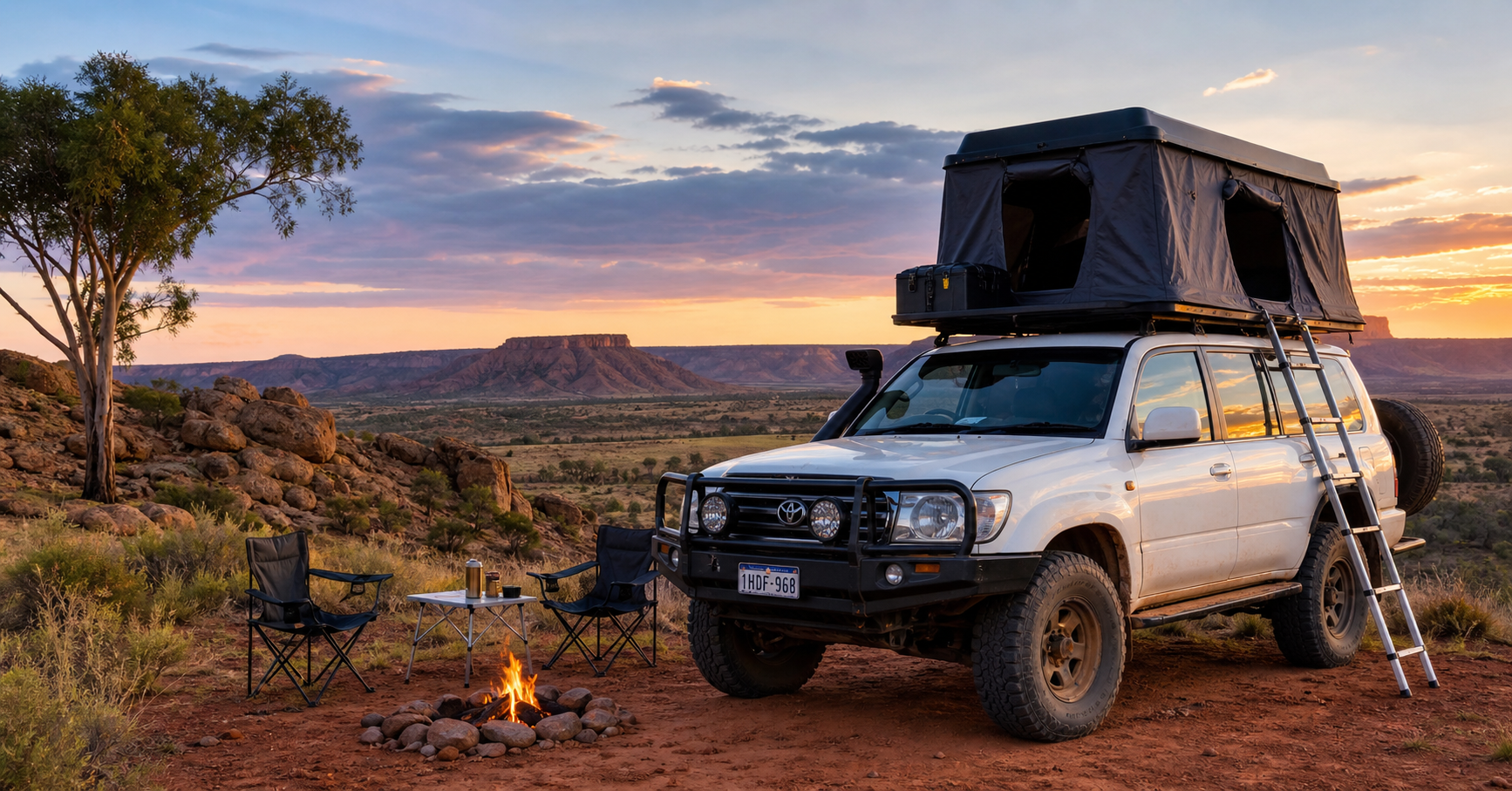
The Outback covers a whopping 81 per cent of Australia, and experiencing it is far easier than most people expect.
Modern solar-powered caravans, satellite technology, and guided remote tours have changed everything. You no longer need expert bush skills or a fully-kitted rig to get started.
Off-grid travel is booming. More Australians are choosing to disconnect from devices and reconnect with nature. Whether you prefer a guided cultural experience or a self-sufficient caravan adventure, there’s a practical entry point for you.
What’s Driving the Rise in Off-Grid Outback Travel?
57% of Australians are planning local trips in 2025, up from 52% the year before. A big chunk of that interest is pointing inland.
People are tired of crowded peak-season parks with noise and queues. They want space, quiet, and something that feels real.
Cost of living is a factor, too. Free camping and self-sufficient setups are becoming a smart financial choice, not just a lifestyle one.
Social media has played a role as well. 63% of travellers say platforms like Instagram shape where they go. A photo from a red-dust camp under a clear Outback sky connects with people in a way a resort pool never could.
What Are the Easiest Ways to Get Off-Grid in the Outback?
You do not need a fully custom rig to go off-grid. There are practical options at every level:
- Hire a camper or 4WD with an off-grid kit already built in. Many rental operators now offer rigs with solar, lithium batteries, and water tanks already fitted. You show up and drive.
- Join a small group guided tour. Tour operators handle logistics, food, and camping. You just pack your bag and go. Tours out of Alice Springs to Uluru and Kings Canyon are particularly beginner-friendly.
- Buy or borrow an off-road caravan. Modern off-road caravans come standard with solar panels, 100-litre-plus water tanks, and lithium battery systems. They handle gravel roads far better than older vans.
- Start with a rooftop tent setup. A rooftop tent mounted on a 4WD is one of the most accessible ways to go off-grid. You are off the ground, away from snakes and water, and setup takes under two minutes. Brands like Rigdup Australia, iKamper, and James Baroud offer models suited to Australian conditions.
- Try a supported station stay. Places like Bullara Station in WA let you camp on private working properties. Facilities are basic, but you are not completely alone.
How Is Technology Making Remote Travel More Accessible?
Ten years ago, going off-grid in the Outback meant genuine isolation. That has changed.
Starlink Mini has become one of the most popular upgrades for Australian campers. It delivers 50-180 Mbps download speeds in remote areas, including Birdsville and the Gibb River Road. Setup takes under 10 minutes.
Plans start at around AUD $80 per month. It runs comfortably off a 200-watt solar panel with a lithium battery bank.
Pair that with a REDARC or Victron Energy battery management system, and your caravan or 4WD becomes a proper mobile power station.
GPS navigation apps like Hema Explorer show offline maps with camp spots and track conditions. Personal Locator Beacons (PLBs) are a legal requirement in many remote areas and can pinpoint your location for emergency services instantly.
Technology hasn’t removed the adventure; it’s just made the margin for error much smaller
Which Outback Regions Are Best Suited for First-Timers?
Not every region is the right starting point. Here’s where to begin:
The Red Centre is arguably the best first Outback experience. Alice Springs gives you a solid base. From there, Uluru, Kata Tjuta, and Kings Canyon are all reachable on well-maintained sealed or light gravel roads.
The Flinders Ranges in South Australia are another excellent first trip, close enough to Port Augusta for supplies, but genuinely remote once you head into Ikara-Flinders Ranges National Park.
In Western Australia, Exmouth and Cape Range National Park are spectacular and far more forgiving than the deeper Kimberley.
Best travel window: May to September. Daytime temperatures drop to a manageable 20-28°C.
Avoid the Red Centre in January and February, temperatures regularly hit 45°C, and the ground stays scorching all night.
What Should Travellers Know Before Heading Off-Grid?
Planning makes the difference between a brilliant trip and a dangerous one.
Water is your most critical resource. Carry a minimum of 10 litres per person per day. A 100-litre onboard tank sounds like a lot, until you’re two days from the nearest town.
Fuel planning matters just as much. Some stretches exceed 500 km, so a long-range tank or jerry cans are essential.
Always register your trip with a responsible contact and consider filing a trip plan with local police if heading to extremely remote areas.
A PLB registered with AMSA is non-negotiable. It costs nothing to activate in an emergency and can save your life.
Check your vehicle’s roof load rating before fitting a rooftop tent. Many utes and 4WDs have a limit of 75-100 kg; a tent plus occupants can exceed that.
How Are Guided and Supported Tours Changing the Game?
Guided tours have quietly become one of the smartest ways to experience the Outback, especially for those without a purpose-built rig.
The model has changed. It’s no longer just large coach groups doing drive-bys of Uluru.
Operators now offer small group adventures with 10-16 people maximum, bush camping under the stars, proper fire cooking, and guides who carry satellite phones and know the country deeply.
Aboriginal-led tours through Kakadu and Arnhem Land add a layer of cultural understanding that no app or map can replicate. These guides have a lived connection to the country; they show you things no tourist map lists.
For those who want comfort, supported luxury tours now operate out of permanent tented camps near Uluru and the Kimberley. You still sleep in the Outback, but with a proper bed and a hot shower.
Is Sustainable Off-Grid Travel in the Outback Actually Achievable?
Yes, and it matters more than most travellers realise.
Over 6.5 million Australians go camping annually. Growing numbers are heading into national parks and remote areas. That volume creates real pressure on fragile ecosystems.
Leave No Trace principles are the practical starting point:
- Pack out every piece of rubbish
- Use a portable toilet or the cat-hole method 200 metres from water
- Never create a new fire ring where one doesn’t exist
- Check fire ban conditions through the relevant state parks app before every night, they change frequently and without notice
Permits matter too. Many Outback routes pass through Aboriginal Land Trust areas in WA and the NT. These require permits from the relevant Land Council, sometimes weeks in advance. Travelling without one is not just disrespectful: it’s illegal.
Over 520 campsites currently hold Ecotourism Australia certification, and that number is growing.
Wrapping Up
The Outback has never been more reachable for everyday Australians. Better gear, smarter technology, and more flexible tour options have removed many of the old barriers.
Whether you choose a best rooftop tent on a hired 4WD, a solar-powered caravan on a gravel track, or a guided small group tour into the Red Centre, there is a path that suits your experience level.
What has not changed is what the Outback offers on the other side of that planning: silence, scale, stars, and a landscape that genuinely puts life in perspective. Go prepared, go respectfully, and go.
